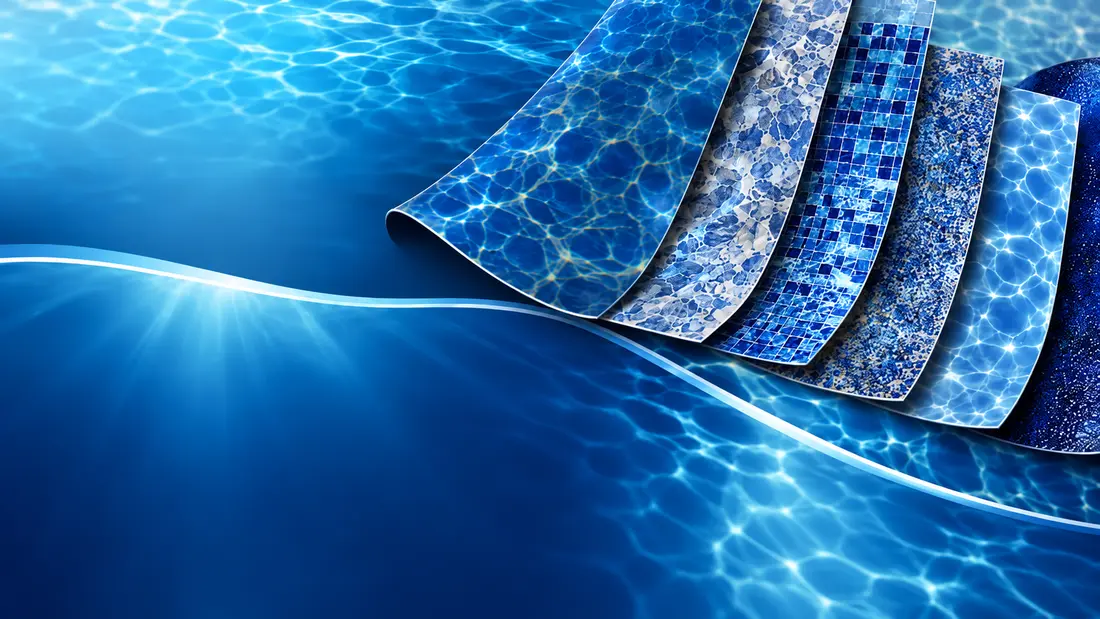
Vinyl Pool Liner Installation & Replacement
Kristi's Pool Service provides vinyl pool liner installation and replacement for homeowners whose liners have started to fail. Over time, a vinyl liner can fade, leak, wrinkle, stretch or pull away from the track that holds it in place. A replacement pool liner restores a watertight surface, gives your pool a clean new look and lets you deal with problems before they spread to the walls and floor underneath.
Why Vinyl Pool Liners Eventually Need Replacement
A vinyl liner is the waterproof membrane between your pool water and the structure that supports it. It works hard every day. Sunlight, chlorine, water chemistry swings, temperature changes and normal swimming activity all wear on the vinyl. As the material ages, it gradually loses the flexibility it needs to stay smooth, sealed and properly seated.
How long a liner lasts depends on several factors, including the quality and thickness of the vinyl, how well the water has been balanced over the years, how much direct sun the pool receives and how carefully the pool has been used. Two liners installed at the same time can age very differently. That's why it helps to look at the liner's actual condition rather than relying on its age alone.
Every replacement starts with an assessment
Every pool is different, so liner replacement starts with an assessment of your current liner, how it fits and what may be happening beneath it. From there, we can help you understand your options, choose a new liner and plan the installation.
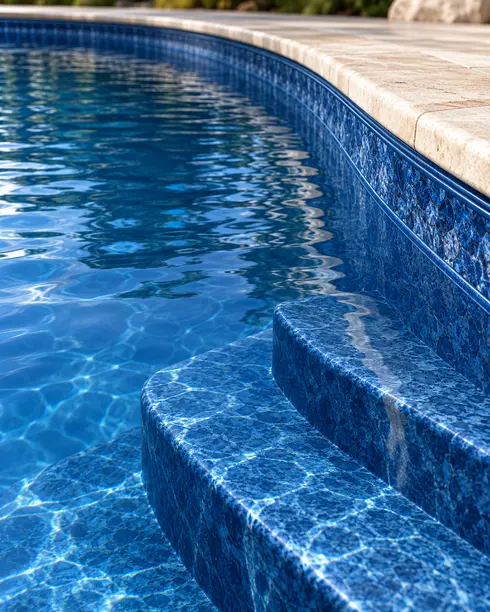
When Should You Replace a Vinyl Pool Liner?
These are the most common signs that a liner may be nearing the end of its useful life. One sign on its own doesn't always mean replacement is needed, but several together are worth having evaluated.
- Liner age. An older liner is more likely to develop multiple problems at once, even if it looked fine a season ago.
- Fading or chalky color. Sun and sanitizer gradually break down the pigment and surface of the vinyl. Heavy fading often goes along with a loss of flexibility.
- Brittleness. Vinyl that feels stiff or cracks when touched, especially near the waterline, steps and corners, is harder to repair and more likely to tear.
- Water loss. If you're adding water more often than evaporation would explain, there may be a leak in the liner or around a fitting such as a skimmer, return, light or drain.
- Wrinkles or stretching. As a liner ages or is exposed to unbalanced water, it can stretch and form wrinkles that collect dirt and become tripping or wear points.
- Liner bead problems. The bead along the top edge of the liner locks into a track under the coping. If it keeps slipping out, the liner may have shrunk or the track may need attention.
- Recurring repairs. A patch can be a good fix for an isolated hole, but when new leaks keep appearing or old patches fail, the liner itself is usually the underlying problem.
Why Inspecting Beneath the Liner Matters
A new liner is only as good as the surface it sits on. Once the old liner is removed, the structure underneath can be checked before anything new goes in. Problems that are covered up by a new liner tend to show through or cause wear later.
Walls
Pool walls should be solid and free of rust, damage or rough spots that could press into the new vinyl.
Floor
A smooth, firm floor helps the liner sit evenly. Washouts, depressions or debris can show through as bumps and soft spots.
Track
The liner track holds the bead in place. A bent, cracked or loose track can let a new liner pull free.
Fittings
Skimmers, returns and lights are sealed against the liner with gaskets and faceplates, so their condition affects whether the pool stays watertight.
Steps
Steps, benches and seats have edges and corners where liners often wear first, so they need close attention during measuring and fitting.
Drains
Main drains are sealed through the liner and should be checked so the new liner can be properly fitted around them.
What Is Included in Vinyl Pool Liner Installation?
The exact scope depends on your pool and its condition, but a typical liner replacement project involves the following parts. We'll explain what applies to your pool when we review the project with you.
Measurement
Detailed measurements of the walls, floor, depth changes and steps so the replacement liner is made to fit your pool's shape.
Liner selection
Help choosing a pattern, color and thickness that suits your pool, your preferences and your budget.
Removal of the old liner
The pool is drained and the existing liner is removed so the structure can be inspected.
Surface preparation
Walls, floor and track are evaluated. Any needed repairs or preparation can be discussed before the new liner goes in.
Fittings and seals
Necessary gaskets, faceplates and fittings can be evaluated as part of the installation so they seal properly against the new liner.
Fill and startup
Once the liner is set, the pool is refilled and you'll get guidance on startup and early care.
What Happens During a Vinyl Pool Liner Replacement?
Liner replacement follows a clear sequence. Knowing what to expect makes it easier to plan around the work.
-
Pool assessment and estimate
We look at your current liner, how the pool is performing and any signs of problems underneath, then provide an estimate for the work.
-
Measurement and liner selection
Your pool is carefully measured and you choose the pattern and specifications for your replacement liner, which is then ordered to fit.
-
Drain and remove the existing liner
The pool is drained in a controlled way and the old liner is taken out, exposing the walls, floor and track.
-
Inspect and prepare walls and floor
The structure is checked for damage, rough spots and track issues. Preparation needed for a smooth installation is completed or discussed with you.
-
Install and vacuum-set the new liner
The new liner is placed and its bead is locked into the track. A vacuum draws the vinyl tight against the walls and floor to minimize wrinkles.
-
Reinstall fittings and begin filling
As water is added, openings for skimmers, returns, lights and drains are cut and sealed with the appropriate gaskets and faceplates.
-
Startup and care guidance
Once the pool is full, the water needs to be brought into balance. We'll share guidance on caring for your new liner going forward.
Should You Patch or Replace a Vinyl Pool Liner?
Not every liner problem calls for a full replacement. Whether a patch or a new liner makes more sense depends on the age and condition of the vinyl, the type and location of the damage, and how the liner has performed recently.
A patch may be enough when
- The liner is relatively young
- The vinyl still feels soft and flexible
- The damage is localized to one area
- There is a single small tear or puncture
- The liner remains firmly seated in the track
Replacement may make more sense when
- The vinyl has become faded, brittle or chalky
- Several leaks have occurred
- Previous repairs keep failing
- Wrinkles or stretching are increasing
- The liner is pulling out of the track
The key difference is the condition of the surrounding vinyl. A patch bonds to the material around the damage, so it tends to work best when that material is still healthy. On an older liner that has become brittle, a patch may hold for a while, but new tears often form nearby, and repeated repairs can add up. On the other hand, replacing a liner that is otherwise in good shape because of one small puncture may not be necessary. We'll walk you through what we see so you can weigh the options and decide what's right for your pool.